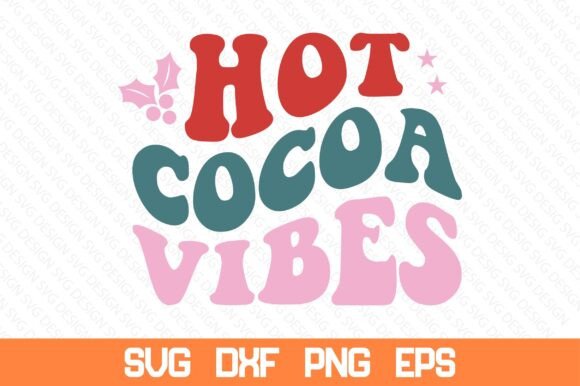
Hot Cocoa Vibes Retro SVG Review
As a designer who spends more time staring at stitch charts and fabric swatches than actually sleeping, I have learned to be skeptical of any graphic that promises "vibes" without delivering structural integrity. When I first pulled up the Hot Cocoa Vibes Retro SVG, my initial reaction was one of cautious optimism. We are currently drowning in seasonal content, particularly around autumn and winter holidays, so standing out requires more than just a catchy phrase. It requires a design that translates well from a flat vector screen to a textured, three-dimensional embroidered surface.
I evaluated this file not just as a digital asset, but as a potential commercial product for my own small shop and client projects. The goal was to determine if this embroidery project holds up under the scrutiny of real-world stitching, or if it is simply another pretty picture that falls apart when the needle hits the fabric.
First Impressions: Mood and Visual Personality
The aesthetic of the Hot Cocoa Vibes Retro SVG leans heavily into nostalgic warmth. The typography and layout suggest a cozy, retro-inspired feel that aligns perfectly with current trends in handmade goods. For an Etsy seller or a crafter looking to build a brand identity around comfort and home, this design offers immediate emotional resonance. It feels like something you would see on a high-end boutique sweatshirt rather than a mass-produced item from a big-box store.
From a pure design standpoint, the composition is balanced. However, the success of any machine embroidery design lies in its details. Does the text remain legible? Do the decorative elements clutter the negative space? In this case, the design maintains a clean hierarchy. The central message is clear, and the surrounding graphics support rather than overwhelm. This balance is crucial for custom apparel, where too much detail can make the piece look busy and cheap once stitched.
Real-World Application: From Screen to Stitch
To truly test this embroidery file, I imagined placing it on various substrates common in the craft business. Let’s start with the most obvious candidate: a heavy cotton canvas tote bag. The retro theme pairs exceptionally well with natural fibers. When stitched onto a beige or cream canvas, the contrast allows the design to pop without requiring excessive thread colors. It transforms a simple utility item into a handmade product that feels curated and thoughtful.
Another strong use case is sweatshirt embroidery. Think of a heather grey or oatmeal-colored crewneck. The "hot cocoa" theme suggests warmth, and seeing that design stitched into the chest area of a cozy sweater creates an instant connection with the wearer. It works beautifully as a personalized gift for teachers, coworkers, or family members during the holiday season. The design has enough visual weight to stand up against the thick texture of fleece or French terry, ensuring the embroidery doesn’t get lost in the fabric nap.
I also considered smaller applications, such as an embroidered patch for a denim jacket or a backpack. If sized correctly, the Hot Cocoa Vibes Retro SVG could serve as a charming accent piece. However, this brings us to the critical considerations of scale and complexity, which we will discuss next.
Where Caution Is Required
No design is perfect for every situation, and this one is no exception. There are specific scenarios where this graphics file might struggle:
- Small Hoop Sizes: If you attempt to digitize or use this design in a hoop smaller than 4x4 inches, you risk losing the subtleties of the retro styling. Tiny lettering can become illegible, and fine lines may merge together.
- Textured and Stretchy Fabrics: While sturdy fabrics like canvas hold up well, thin jersey knits or highly textured wool blends can distort the shape. Without proper stabilization, the stitch density might pucker the fabric, ruining the professional finish.
- Dense Stitch Areas: If the design includes large blocks of fill stitch, ensure your machine can handle the thickness. On items that require frequent washing, such as baby clothes or kitchen towels, overly dense embroidery can wear out faster or feel uncomfortable against the skin.
- Curved Surfaces: Applying this to a cap or a curved hat brim requires advanced hooping techniques. The flat nature of the original vector might not translate seamlessly to a curved surface without significant adjustment.
For these reasons, I advise testing the design assets on scrap fabric first. Check how the thread colors interact with your specific fabric choice. A design that looks vibrant on a white background might disappear on a dark navy shirt unless you adjust the thread palette.
Technical Compatibility and Workflow
One of the strongest selling points of the Hot Cocoa Vibes Retro SVG is its versatility in file formats. The inclusion of both EPS and DXF files makes it accessible to a wide range of users. Whether you are using Cricut or Silhouette for vinyl cutting, or working within Adobe Illustrator and Photoshop for mockups, the vector nature ensures crisp edges.
For those focused purely on embroidery, the DXF file is essential. It allows for easy conversion into embroidery software, though you must still review the resulting digitization. Pay close attention to the stabilizer requirements. Some designs need cut-away stabilizer for stability, while others perform better with tear-away. Understanding these nuances is what separates a hobbyist from a professional craft business owner.
Additionally, the transparency of the background in the provided files means you can easily place the design over different colored backgrounds in your printable mockup software. This is invaluable for marketing. You can showcase the same embroidery project on a variety of products—pillow covers, aprons, tea towels—without needing to photograph each physical item.
Final Verdict: Is It Worth Adding to Your Inventory?
After weighing the pros and cons, the Hot Cocoa Vibes Retro SVG emerges as a solid, commercially viable asset. It captures a popular mood with a clean, retro aesthetic that appeals to a broad demographic. It is ideal for holiday embroidery collections, small shop products aimed at gift-givers, and commercial embroidery jobs that require a touch of whimsy.
However, success depends on execution. As an experienced reviewer, I cannot stress enough the importance of pre-production checks. Confirm the licensing terms before selling finished items. Ensure your digitizing process respects the stitch density and uses appropriate applique design or satin stitch techniques where necessary. Test for colorfastness if the final product will be washed often.
If you are a digital product seller or a maker looking to expand your seasonal offerings, this design provides a strong foundation. It is not a magic bullet that guarantees sales, but it is a high-quality starting point that, when paired with good craftsmanship and smart marketing, can significantly enhance your brand consistency and buyer engagement. Just remember: the best embroidery happens when digital precision meets human care.